

Barefoot teacher educators?
In the 1980s, I transitioned from teaching in schools to being a teacher educator in a university. In my new job, I collaborated with a teacher in a state secondary school to create a programme that would enable his colleagues to become agents of change. At that time, I was known as the ‘college tutor’ and so my teacher collaborator became ‘an associate tutor’. The programme was successful, so the model caught on. After a year or two we had similar programmes in many schools and a growing team of associate tutors. I wrote a paper reflecting on the phenomenon of experienced teachers taking on a role that had previously been the preserve of university staff. The title included the term ‘barefoot tutors’, which I had picked up when reading about China at the time of Mao Zedong. There were very few qualified doctors in rural areas so the government recruited millions of people who would receive basic training in matters such as preventative healthcare, family planning and hygiene. These paramedics would then be able to provide a basic level of healthcare in their rural communities.

Teachers as facilitators of teacher leadership
From my current perspective, I regret the use of the term ‘barefoot tutors’ which now strikes me as derogatory. Since the time I used it, I have known scores of teachers – in the UK and many other countries – who have taken on the role of facilitator in teacher leadership support programmes and most of them have demonstrated a high level of skill. As documented in our recent book Teachers and the Practice of Leadership, such teachers have been able to use the workshop tools that accompany the book to empower and enable their colleagues to develop their leadership capacity. When they first begin to do this, teachers are often tentative – it seems to be a departure from their normal role teaching children. Hower, facilitators soon realise that the skill set they have honed through their practice in classrooms and schools over many years, is just what is required to be a good facilitator. The ones who find the role challenging have usually been accustomed to the norms of an education system in which constructivist pedagogy is yet to be accepted or understood. In the HertsCam Network, we had developed the practice of facilitation over many years and were therefore able to add a masters programme to our repertoire. A distinctive feature of the MEd in Leading Teaching and Learning was that it was entirely taught by practicing school teachers. The role of our partner university was limited to quality assurance.
The issue about the term barefoot tutors came into sharp focus some years ago when, along with several facilitators who taught our masters programme, I attended an academic conference in Portugal. In the Reception, I bumped into a Professor of Education from a British university who asked what had brought me to the conference. I explained that, along with my teacher colleagues, I was to present a paper about the new masters programme that they were teaching. His reaction: “What on earth qualifies them to teach on a masters degree programme?” His sense of outrage was palpable. I explained that these ‘scholar practitioners’ were very well qualified because, not only had they engaged in critical scholarship through post-graduate study, but when leading seminars, they were also able to draw upon their ongoing experience of teaching and leadership in schools. This was illustrated in our book about the masters programme, cited above, which includes the following description of a seminar being led by two teachers.
Jo then takes over and refers us to the idea of professional cultures. She makes detailed reference to the input in the previous session by Paul about the use of tools for analysing school culture… She introduces a new tool for ‘examining the culture in your school’. Participants are asked to use the tool to reflect on the professional cultures in their own schools and then share in pairs, then on the table. This is an essential feature of the programme: this opportunity to talk about their institutional realities is precious.
Observation feedback, November 2015
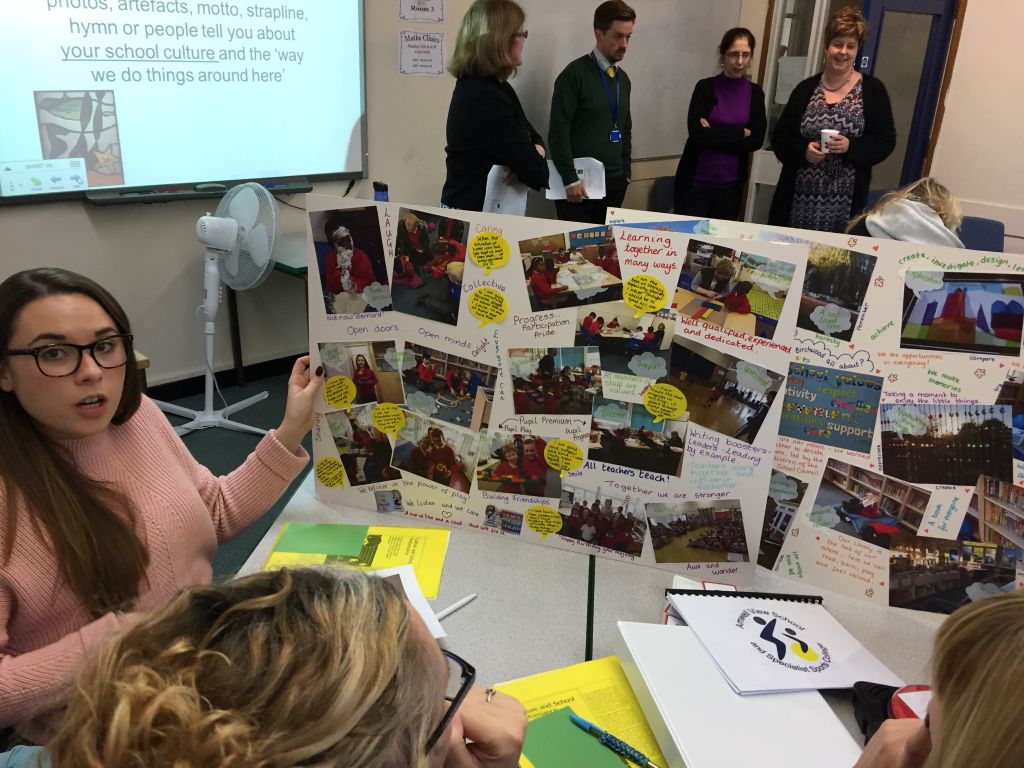
I was the observer of this session. Jo Mylles and Paul Rose, the facilitators, taught in schools in Hertfordshire and held senior leadership posts. To enable the teachers who were participating in this seminar to reflect on and talk about their experience in schools, Jo and Paul were able to draw from their own contemporary experience and draw on academic texts to introduce concepts such as ‘social capital’ and ‘organisational culture’. What I witnessed was post-graduate teaching of the highest order. It was based on knowledge grounded in both practical experience and academic reading. So far from being barefoot, such people are fully booted and totally suited to enable fellow professionals to learn.
In Teachers and the Practice of Leadership, we argue for a vision of educational change which does not depend on the assumption that teachers need to be ‘trained’ by expert providers beyond the school. Instead, we propose that policy makers provide support and encouragement that promotes school-based programmes facilitated by experienced teachers within their schools as spelled out in the freely downloadable Non-positional Teacher Leadership: Information and Guidance. In our book, we argue that teacher-facilitators can, with a modest level of support, build their own networks and build a social movement dedicated to enabling their colleagues to become agents of change, as the following extract indicates.
We hope that those who choose to initiate (teacher leadership programmes) and facilitate… will find each other and form a social movement in which they can collaborate and advocate for non-positional teacher leadership. Perhaps then we can show policy makers that the answer to the education crisis lies within the teaching profession. Ultimately, it is teachers who can and will make a difference to what happens in schools.
Frost et al., 2026: 119
Established approaches to change and reform are clearly not working and need a radical rethink. The breakthrough will come when policy makers accept the need to respect teachers and enable them to use their talent and skills to empower and enable their colleagues to lead change. The solution to the education crisis is for policy makers to recognise that the potential for reform and improvement lies within the teaching profession itself. The guidance and support materials freely downloadable from the non-positional teacher leadership website can be used by teachers and schools to fulfil this potential.

